When the Shaikh of the Shaikhs of Islaam, Ibn Taymiyyah, passed away, “The Muʾaḍhin of the Fortress [in which the prison was] cried out from atop the minaret of its mosque [about it], and the guards spoke about it, and the people gathered, the markets that would normally open early remained shut, people gathered, crying and speaking well of him. And his brother, Zainud-Deen ʿAbdur-Raḥmān, told them that in prison they had both finished reading the Quran eighty times, and when reading for the eighty-first time they had stopped at the Most High’s Saying: ‘Indeed, the righteous will be amid Gardens and rivers, at the Seat of Honour in the presence of the Most Powerful Sovereign.’” [Al-Qamar: 54:54-55] Al-Maqṣad al-Arshad, 1/138.
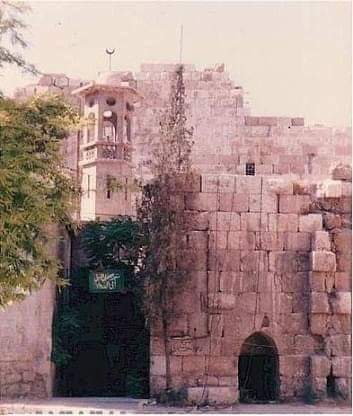
This is that prison:
And then centuries later, the Mujaddid, al-Albaani, was imprisoned in that very same place, raḥimahumallāh.
Shaikh Abdul-Latif bin Ali as-Sultaani said, “In the Spring of 1977 I met a distinguished scholar who was serving Islam and freeing the Sunnah from things falsely attributed to it, uncovering the authentic hadith from the weak and false.
I asked him, ‘Noble Shaikh, do you give any lectures where you direct and advise and counsel the people?’ So he responded saying that the Ministry of Religious Affairs in their city had prevented him from teaching in the mosques unless he produced a permit from the [main] Ministry of Religious Affairs allowing him to do so. He said so when I applied for said permit the Ministry refused it.
I said to him that this is something common in Arab countries in general and that I didn’t know if it was the same in non-Arab countries. So I asked him, what then will you do?
He said, ‘I’ve gone back to writing and publishing and printing books and in this is service to this pure religion and I hope that Allaah grants me success in that and accepts it.’
That Shaikh was Muhammad Naasirud-Deen al-Albaani, may Allaah protect him.” Sihaamul-Islaam, p. 144.
Shaikh Al-Albaani was asked about wearing sunglasses, so he said, “Actions are judged by their intentions. They are permissible if someone wears them to protect himself from the sun. But if by wearing them he wants to hunt pretty girls in order to satisfy his animalistic impulses, then it is haram!” Al-Hudā wan-Nūr, no. 1256.
Al-Albaani: Who did you say is with you? I can hear him, tafaddal, … [doing dhikr] Lā ilāha illallāh, Lā ilāha illallāh …
Questioner: I was talking about how the problem in what a person is told is actually from the people telling him about it [a phrase taken from a line of poetry showing how people can relay things contrary to reality], so we’d heard about many scholars, many students of knowledge, but when we met them, and sat with them, they turned out to be less than what we’d heard—except for you, O Shaikh.
Al-Albaani: [trying to deny what he’s saying] ʿAfwan …
Questioner: When we met you, and Allaah is a witness to what I am saying …
Al-Albaani:Allaahu Akbar …
Questioner: … you turned out to be way above what we expected, and …
Al-Albaani: O Allaah forgive what they don’t know about me!
Questioner: … and that is Allaah’s Grace on you.
Al-Albaani: I swear an oath that you are mistaken!
Questioner:Allāhul-Mustaʿān. You taught us to say, O Shaikh, ‘O Allaah make me …
Al-Albaani: Yes
Questioner: … better than what they think of me, and forgive what they don’t know about me.’
Al-Albaani: … and forgive what they don’t know about me. That is what I always say. Lā ḥawla wa lā quwwata illā billāh. You know some of the narrations from some of the Salaf, maybe you know them better than me, but maybe I can relate the meaning to you—if you knew what I was really like you wouldn’t go along with me, Allāhul-Mustaʿān, Allāhul-Mustaʿān.
Before he passed away, Shaikh al-Albaani, may Allaah have mercy on him, wrote in his will that he wanted to bequeath his entire library to the Islamic University of Madīnah, here is a video showing his section at the library there. At the entrance they show his handwritten will. The narrator, who is in charge of the library, says the university has a team which indexed it all, made copies of the manuscripts and organised them, they also copied all of his books which have his annotations, notes and explanations written on them to make available for viewing.
A link to his will here, at the bottom is a link to a translation.
Al-Albaani: … so as you saw with me the reality is that the entire ḥadīth [we were talking about] is knowledge, from the start to the end, it is all fiqh, and this is what is meant by his ﷺ well-known saying, “Whoever Allaah wishes to grant good, He gives him understanding of the religion.” Understanding in the religion is understanding Allaah’s Book and His Messenger’s Sunnahﷺ. So he ﷺ said to Muʿāwiyah, “Bring her,” so when she came he ﷺ asked her, “Where is Allaah?”
Allaah’s Messenger ﷺ is the one who established this Sunnah for us to ask, “Where is Allaah?” We did not innovate this question of our own accord, we are following Allaah’s Messenger ﷺ when we ask someone, “Where is Allaah?”
“So the slave-girl replied, ‘Above the Heavens.’”
“Where is Allaah?” the Messenger of Allaah ﷺ is the questioner.
“Where is Allaah?” She replied, “Above the Heavens.” He ﷺ said to her, “Who am I?” She said, “You are Allaah’s Messenger.” So then he ﷺ said to her owner, “Free her for she is a believer,” “Free her for she is a believer.”
There ends the ḥadīth of Muʿāwiyah ibn al-Ḥakam as-Sulamī which the Imāms, the Imāms of ḥadīth reported: Imām Muslim in his Ṣaḥīḥ, Imām Mālik in his Muwaṭṭaʾ, Imām Aḥmad in his Musnad, Imām Abū Dāwūd, his student, in his Sunan—count whichever books of the Sunnah you want, all of them reported this story, this authentic ḥadīth, and Imām ash-Shāfiʿī may Allaah be pleased with him used it as proof as did others and all the Ummah accepted it, some rulings were derived from it which we alluded to earlier when commenting on this authentic ḥadīth …
Al-Albaani: I wanted to remind you of a ḥadīth in connection to what you said but then my mind went to another one connected to what my friend here said …
He ﷺ said, “… if you did not sin, Allaah would replace you with people who would sin and they would seek forgiveness from Allaah and He would forgive them,” what does this ḥadīth mean?
Its meaning is that Allaah the Mighty and Majestic said in the Noble Quraan that He created mankind in the best form, He didn’t make man like an infallible angel, “… who disobey Him not and do whatever Allaah has commanded them,” He made him a human being who has intellect, a soul, desires and volition, so he lives with these characteristics which Allaah gave him so that he can obey Allaah the Mighty and Majestic, not in an infallible manner, because there is no infallibility according to the hadith—yaʿnī, our Lord doesn’t intend for us to be infallible, and there is no-one who can repel His Decree and Will—but He wants them to repent when they sin, “… if you did not sin, Allaah would replace you with people who would sin and they would seek forgiveness from Allaah and He would forgive them.”
And naturally this hadith is not an encouragement to commit sins inasmuch as it is an encouragement to seek forgiveness when one does.
Questioner: Does this include all sins?
Al-Albaani: What’s that?
Questioner: Does this include all sins or just minor lapses?
Al-Albaani: Whatever sin it is, yes.
Questioner: Even the major sins, yaʿni?
Al-Albaani: Whatever sin it is, whatever sin it is. I’ve forgotten the hadith that had occurred to me about what you said, what did you say?
Questioner: Not praying and then committing … [unclear] … better that he prays …
Al-Albaani: Ah, the hadith that I was thinking about was when a man came to the Prophet ﷺ and said, “O Messenger of Allaah, I went in a garden,” yaʿnī an enclosed garden, “and found a woman there and did what a man would do with his wife except intercourse,” so he ﷺ said:
“Did you pray ṣalāh with us?”
He replied, “Yes.”
So he said, “Verily good deeds wipe out the bad.”
For this reason when you say to a man [trying to encourage him] that, “You’re drinking so pray ṣalāh along with it Yaa Akhi, good deeds wipe out the bad,” this is a Legislated method of giving daʿwah, and is not an innovated one as you indicated that some say [earlier].
In relation to this I’ll mention that hadith of the young man who came to the Prophet ﷺ and said, “O Messenger of Allaah, give me permission to fornicate.” So he ﷺ said, “Would you like that for your mother?” The man said, “No …” He said, “Neither would people like it for their mothers. Would you like that for your sister?” The man said, “No,” The Prophet ﷺ said, “Neither would people like it for their sisters.” Then he ﷺ placed his hand on his chest and said, “O Allaah guard his chastity and purify his heart.”
Questioner: Now, should a person supplicate to the Lord of the Worlds to totally protect him from mistakes and slip-ups, yaʿnī, it’s as though it’s not recommended?
Al-Albaani: He, yaʿnī, the hadith in Bukhaari, “And the one who is truly protected is the one who is protected by Allah,” so he does ask [Allaah].
Questioner: This is recommended?
Al-Albaani: Yes … …
Questioner: May Allah reward you with good, by Allaah there’s no doubt that what caused this spiritual state in you was the Mercy of the Lord of the Worlds in that how can this person who does such a huge thing …
Al-Albaani:Allaahu Akbar.
Questioner: [and then] one ṣalāh …
Al-Albaani:Allaahu Akbar.
Questioner: … and that thing is gone, this is from the Lord of the World’s Mercy on His Slaves, for if not people would despair …
Questioner: Esteemed Shaikh, I have a question. There is a fatwā of Dr. [Yūsuf] al-Qarḍāwī about the ḥadīth concerning the splitting of the Ummah [wherein he states] that the last part of the ḥadīth, i.e., “‘… all of them are in the Fire except one …’ is fabricated,” and is not part of the original ḥadīth?
Al-Albaani: Not everyone who speaks about a particular topic is listened to.
Have you ever known Shaikh al-Qarḍāwī to have written a small piece on the Science of Ḥadīth, let alone a book, let alone books, let alone volumes?
This is the calamity of this day and age.
People like al-Qarḍāwī and the Egyptian, al-Ghazālī, they castigate some of the upcoming youth who are on the methodology of the Book and the Sunnah with the understanding of the Salaf as-Sāliḥ—[whereby] if one of them gives a fatwā and they [i.e., the youth] ask them what the proof is they savage them, [saying], ‘Who are you to ask what the proof is? You have to ask the scholars of fiqh and those who have knowledge and whose specialty this is!’—and then they go and fall into the same thing they were denouncing the youth for, and they are Shaikhs, because they [themselves] never took the opinions of the experts in the field of ḥadīth.
Questioner: True.
Al-Albaani: Qarḍāwī himself, I know him personally and we were together for a few days in Qatar, we met at a gathering of the Higher Council of the Islamic University many times and he trusts my knowledge and knows my firm grasp of it, yet now in order to justify some of the bad circumstances in the Islamic world you see him authenticating what is weak and declaring weak the part in this ḥadīth [that you asked about] which is [actually] authentic.
That is why our Muslim brothers, [Muslims] whether they are men or women, should know, as is said in the old Arabic proverb, “How to eat the shoulder …” [a literal translation, it is used to refer to someone astute, insightful, who knows how to handle things].
Yaʿnī, as you know, today you will have a field of science that has categories of specialisation, for example, a person who has pain in his ear won’t go to a doctor who specialises in internal medicine, a gastroenterologist and so on, he will go to an ENT specialist.
This specialisation is very important and is one of the meanings of the Most High’s Statement, ‘And ask the people of knowledge if you do not know,’ so al-Qarḍāwī and al-Ghazālī like him and [yet] others are not people of knowledge in the science of ḥadīth, in declaring them to be authentic or weak, if they do have any knowledge then it is the blind-imitation fiqh [type] and not the fiqh derived from the Book and the Sunnah.
Questioner:Allāhu yusallimak.
Al-Albaani: We will end it here so as to give an opportunity to the other questioners waiting for this call to end. Was-salāmu alaikum.
Questioner:Wa ʿalaikum as-salām wa raḥmatullāh wa barakātuh, may Allāh reward you with good.
Shaikh Mashoor was asked whether there was an incident that left an impression on him with Shaikh al-Albaani?
He replied, “There are lots, loads, the one that had a great impact on me was the first time I met him, the first time I met him was when I was in secondary school, and the Shaikh used to go to this house … where the top floor was a library, so subhānallah, I saw that there was some bedding on the floor, it was the Shaikh’s, he would work until he got tired, and when he would get tired he would sleep there, amongst the books—seeing that affected me greatly, it had a very deep effect on me …”
Maimūn ibn Mahrān said that Muʿāwiyah رضي الله عنه proposed marriage to Umm ad-Dardā so she refused to marry him and said, “I heard Abud-Dardā say, ‘Allāh’s Messenger ﷺ said, ‘A woman will be with the last of her husbands,’’—and I want no one in Abud-Dardā’s place.”
Shaikh ʿUthaimīn رحمه الله said, “And the Muḥaddith, the Muḥaddith of his time, the Shaikh Muḥammad Nāṣirud-Dīn al-Albānī, may Allāh grant him success, commented on this book with beneficial notes, brief in length yet with benefits abounding, clarifying some of the more obscure words [found in it], likewise expounding on the grading of the ḥadīths in it, [as to] whether [they are] authentic, or ḥasan or weak—and so with that the book became complete. We ask Allāh Who has blessed us to start it that He also blesses us to be able to finish it, and that He makes us benefit from it along with all those who hear it, verily, over all things, He has power.”
From Shaikh ʿUthaimīn’s explanation of Mishkātul-Maṣabīḥ, here.
In the checking, Shaikh al-Albaani wrote at the end that he completed it, “… on Wednesday, the 7th of September, 1960, in Alexandria …” and then said, “And all praise is due to Allāh for enabling me to do it.” May Allaah have mercy on him.
Shaikh Uthaimeen said that al-Albaani was, “…a Salafi, a Sunni, a Muhaddith [scholar of hadith]—you will be hard-pressed to find anyone like him in this time.”
From Anas رضي الله عنه that the Prophet ﷺ said, “There is no year except that the one after it will be worse, up until you meet your Lord.” Aṣ-Ṣaḥīḥah, no. 1218, [2705].
From ʿĀʾishah, from the Prophet ﷺ, “Three things I swear to: Allāh does not hold a person who has a share in Islām to be like the one who doesn’t have a share—and the shares of Islām are three: fasting, the prayer and giving in charity. Allāh does not protect [/become an ally to] a servant in this world and then abandon him to someone else on the Day of Resurrection. And a man does not love a people except that he will come with them on the Day of Resurrection. And [then] a fourth [thing]—and if I swear to it I do not fear that I will have sinned: Allāh does not conceal a person’s faults in this world except that He will conceal them in the Hereafter.” Aṣ-Ṣaḥīḥah, no. 1387.
Questioner: O Shaikh, is there any, for example, sin on me if I call a person who doesn’t pray [to Allāh], and after having called and called and called him and showed him the punishment for the person who abandons the prayer and that the one who does so wilfully has left the religion … Al-Albaani: The proof has been established against him. Questioner:Yaʿnī, the proof has been established against him but he doesn’t want to .. so if I [then] say, yaʿnī, to myself that I won’t ask Allāh, the Mighty and Majestic, to have mercy on him unless he repents, would I be sinful for making a duʿā like that? Al-Albaani: What was the duʿā? Questioner: To say, ‘Yā Rabb! Don’t show mercy to him unless he repents! Don’t forgive him unless he repents!’ Someone else: ‘O Allāh, don’t have mercy on him!’ Al-Albaani: No [you don’t say that]. You say, ‘O Allāh! Guide him!’ Questioner: O Allāh guide him, yaʿnī, I … Al-Albaani: ‘O Allāh! Guide my people for they know not.’ Questioner: May Allāh reward you with good, may Allāh bless you, may Allāh guide us all, inshā Allāh. Al-Albaani:Āmīn, and furthermore, the reality, my brothers, is that I say that these misguided people are ill, and for this reason we have to show them compassion, we have to show them compassion …
Fatāwā ʿibar al-Hātifi was-Sayārah, no. 158.
Al-Albaani: … … It’s not mine, it’s not mine. [unclear from the context] Questioner: Yes, yes, and your books, explanations of ḥadīth? Al-Albaani: Enough, Yā akhī, that’s it, may Allāh guide you! Questioner: Huh? Al-Albaani: It’s not your time now, question after question after question, until when? Questioner: Sorry, O Shaikh, may Allāh protect you! Al-Albaani:Yā akhī, may Allāh guide you, don’t be selfish, there are other people waiting. Questioner: Things about ʿaqīdah, Yā Shaikh, just answer me about them and then that’s it. Al-Albaani: No, these are not things about ʿaqīdah, you’re asking me whether I have a book about this or that, that is not something connected to ʿaqīdah. Questioner: Ok, where can I understand the correct ʿaqīdah from what you’ve written, Yā Shaikh? Al-Albaani: I don’t have any books specifically about ʿaqīdah … ʿaqīdah is spread out in the books of the people of knowledge, as it is in some of my books … [ending the conversation], was-salāmu alaikum. Questioner: May Allāh protect you, Shaikh. Al-Albaani: Reply to the salām, may Allāh guide you. Questioner:Wa ʿalaikum …, Yā Shaikh, ok, a second question, sorry … Al-Albaani: Reply to the salām, may Allāh guide you. Questioner: Wa ʿalaikum as-salām wa raḥmatullāhī wa barakātuhū.
From Abu Hurairah, may Allaah be pleased with him, from the Prophet ﷺ, [who said], “When you leave your house, pray two rak’ahs—they will prevent you from an evil exit. And when you enter your home, pray two rak’ahs—they will prevent you from an evil entrance.”
As-Saheehah, no. 1323.
Al-Albaani: [The questioner says] “I read in As-Saheehah a page where there is a hadith from the Prophet ﷺ where he said, ‘When you leave your house, pray two rak’ahs—they will prevent you from an evil exit. And when you enter your home, pray two rak’ahs—they will prevent you from an evil entrance,” is that when one travels or when resident? And is it to be done constantly?”
The answer is that it seems as though it is when travelling and not when resident and if it is during travelling then naturally it wouldn’t be something that is done constantly.
Imaam Ahmad (15461) and Ibn Abi Shaibah (23601) report from Abu Tayyaah that he said, “Someone asked Abdur-Rahmaan ibn Khanbash, ‘What did the Prophet ﷺ do when the devils plotted against him?’ So he replied, ‘The Devils came to the Prophet ﷺ from the valleys and descended upon him from the mountains. Amongst them was a devil who wanted to burn Allaah’s Messenger ﷺ with a wooden torch that he had with him.
So [then] Jibreel عليه السلام came and said, ‘O Muhammad! Say [it]!’
A’udhu bi-kalimaatillaahit-Taammaatillati laa yujaawizuhunna barrun wa laa faajirun min sharri maa khalaqa wa dhara‘a wa bara‘a.
Wa min sharri maa yanzilu minas-samaa‘i wa min sharri maa ya’ruju feehaa.
Wa min sharri maa dhara‘a fil-ardi wa min sharri maa yakhruju minhaa.
Wa min sharri fitanil-layli wan-nahaari.
Wa min sharri kulli taariqin illaa taariqan yatruqu bi khairin, Yaa Rahmaan!
I seek refuge in the Most Perfect Words of Allaah which no righteous or evil person can pass from the evil of what He has created, sowed and formed! And from the evil that comes down from the sky and from the evil that ascends it! And from the evil that is sowed in the earth and the evil that comes out from it! And from the evil of the tribulations of the night and day! And from the evil of every single one who comes knocking except someone who comes knocking with good, O Most Merciful One!’
And so the fire of the Devils was put out and Allaah, the Mighty and Majestic, defeated them.’” As-Saheehah 840.
And at-Tabaraani reports in al-Kabeer (3838) from Khaalid ibn al-Waleed, may Allaah be pleased with him, that, “… he complained to the Prophet ﷺ saying, ‘I feel some fear at night.’ So he said, ‘Should I not teach you some words which Jibreel عليه السلام taught me when he believed a powerful [Ifreet] Jinn was plotting against me? He said:
A’udhu bi-kalimaatillaahit-Taammaatillati laa yujaawizuhunna barrun wa laa faajirun min sharri maa yanzilu minas-samaa‘i wa maa ya’ruju feehaa.
Wa min sharri maa dhara‘a fil-ardi wa maa yakhruju minhaa.
Wa min sharri fitanil-layli wa fitanin-nahaari.
Wa min sharri tawaariqil-layli wan-nahaari illaa taariqan yatruqu bi khairin, Yaa Rahmaan!
I seek refuge in the Most Perfect Words of Allaah which no righteous or evil person can pass from the evil that comes down from the sky and ascends it! And from the evil that is sowed in the earth and the evil that comes out from it! And from the evil of the tribulations of the night and the tribulations of the day! And from the evil of all the ones who come knocking during the night and day except someone who comes knocking with good, O Most Merciful One!’”
Questioner: A man who was disobeying Allaah, very rich, then some years later he repents to Allaah, does he have to pay the zakaah of the previous years?
Al-Albaani: He must. Al-Hudaa wan-Noor, 23.
Questioner: Okay, regarding zakaah, maybe the answer will become clear with this question, a man never gave zakaah for many years, then he repented and turned back to Allaah and wanted to give zakaah, so naturally, it is waajib for him to give the zakaah [for those years]?
Al-Albaani: He must.
Questioner: But he had agricultural land, and he doesn’t know how much it yielded, he’s forgotten, so how much zakaah is he to give?
Al-Albaani: According to the best estimate [he can make], as is the case with all matters that are unclear like this, he makes the best estimate he can, he calculates an amount, he strives, ya’ni, [to come to the best estimate he can], there is no specific amount that has been set. Al-Hudaa wan-Noor, no. 31.
Questioner: A man stayed seven years, his wife has a lot of valuable gold, this ornamental gold, he doesn’t know what the ruling is, for seven years he didn’t pay the zakaah?
Al-Albaani: He pays the zakaah for those seven years even if [in the process] he were to lose all his house. Al-Hudaa wan-Noor, no. 41.
Questioner: Is the hadith, ‘Fast and you will be healthy,’ authentic? If it isn’t how so?
Al-Albaani: This hadith differs totally from the one we mentioned before it, that last hadith about which we said that its chain of narration was weak and [along with that] the text itself was untrue [as well].
This hadith [however] is weak in terms of its chain of narration but correct in its meaning, ‘Fast and you will be healthy,’ as a hadith reported from the Prophet ﷺ according to the scholars of hadith its chain of narration is not authentic, but the state of affairs shows, and, before that, general hadith like his saying ﷺ, ‘It is enough for the Son of Adam to eat a few small bites that strengthens his spine. If he must have more, then let him fill a third with food, a third with drink and leave a third for his breathing,’ … so hadiths like this confirm, and as occurs in another hadith which has no basis whatsoever but which does contain fine wisdom, ‘Prevention is the best cure, and the stomach is the home of disease,’ for this reason, this hadith, ‘Fast and you will be healthy,’—its attribution to the Prophet ﷺ is not correct but, due to what we mentioned, its meaning is.
And what I mean when I say, ‘Its attribution to the Prophet ﷺ is incorrect,’ is that it is not allowed for a Muslim to say, ‘Allaah’s Messenger ﷺ said, ‘Fast and you will be healthy,’’ as you may have heard on some radio stations, this is not allowed. Why? Because the Prophet ﷺ said, ‘Whoever attributes to me something that I have not said, let him take his place in Hell.’
So it is not allowed for a Muslim to say a sentence, even if in and of itself it is a piece of wisdom and is acceptable in the view of other general, legislated proofs, [yet] it is [still] not allowed for a Muslim to say, ‘Allaah’s Messenger ﷺ said,’ unless it has, according to the scholars of hadith, been confirmed through the ways which establish the hadiths of the Prophet ﷺ.
The Imaam said, “And the scholars have differed about fasting while on a journey in Ramadaan, there being a number of opinions, and there is no doubt that not fasting during a journey is allowed, and doing that is the preferred option in our opinion if the person not keeping it doesn’t find it difficult to make it up [later], otherwise [i.e., if he does find it difficult to make up later] we prefer that he fasts, and Allaah knows best. And whoever wants to delve further into this topic should refer to Nailul-Awtaar or other books of the people of knowledge.”
Ad-Da’eefah, vol. 2, pp. 336-337.
Commenting on al-Mundhiri’s statement on whether or not to fast when on a journey, the Imaam said, “And he, may Allaah have mercy on him, spoke the truth [when he said], ‘And the better of the two options is the one that is easier.’ People’s strength and circumstances differ, let each one do what is easier for him, and that is why it has been authentically reported that the Prophet ﷺ, when asked about fasting on a journey, said, ‘Fast if you want, or break it if you want.’ (Reported by Muslim 3/145). And from another authentic path [of narration] with the wording, ‘Whichever is easier for you, do it,’ and it has been checked in As-Saheehah, 2884.”
Al-Albaani: Another Ramadaan has come round and you haven’t made up for the [Ramadaan] fasts you missed from the previous year?
There is no harm in that, [but] you should begin making them up at the first opportunity that arises, even if many Ramadaans have passed you by.
Questioner: Yes.
Al-Albaani: There is no harm in that but it is better for a person to be quick to make up missed fasting days, whether a man or a woman, due to the Most High’s Statement, “And hasten to forgiveness from your Lord and a garden [i.e., Paradise] as wide as the heavens and the earth.”[Aali-Imraan 3:133]
But if he isn’t quick, then, firstly, that doesn’t take that obligation away from him, so he must [still] make them up, and [secondly], he doesn’t have to do anything more than simply making them up.
The Imaam said, “It has been related from the Prophet ﷺ that he said, “There are three people who will not be called to account regarding what they eat, as long as it is halal: a fasting person, and the person eating the suhoor meal and the one guarding the frontier in the way of Allaah.” [Hadith grading:] Fabricated.
The Imaam said, “And maybe one of the bad effects of this [fabricated] hadith is the [resultant] state of the Muslims today—for when they sit to break their fast in Ramadan, a person won’t know to get up [and step away] from the food except just before Ishaa due to how many various types of food, drink, fruit and desserts he devours! And how can this not be the case when the hadith says that such a person is one of those who will not be called to account over what he eats!
So due to that they combined the excessiveness which one has been prohibited from in the Book and the Sunnah with the delaying of Maghrib which has [also] been prohibited in his saying, “My nation will remain in good …” or he said, “… upon the Fitrah, as long as they do not delay Maghrib until the stars appear.” (Al-Haakim declared it to be authentic and adh-Dhahabi agreed with him and it is as they both said, for it has other paths and supporting proofs which I pointed to in Saheeh Sunan Abi Daawood, no. 444).
An encouragement to hasten in opening the fast has also been reported in many hadiths, like, “The people will continue to be fine as long as they hasten the opening of the fast.” So both hadiths must be implemented in a manner where one doesn’t negate the other, and that is done by starting iftaar with a few small bites of food by which one’s hunger is calmed down, and then he gets up to pray and then, if he wants, he can come back to the food until he fulfils his need therefrom.
Some of this has been demonstrated in the practical Sunnah, for Anas said, “The Messenger of Allah ﷺ used to break his fast before praying with some fresh dates, but if there were no fresh dates, he had a few dry dates, and if there were no dry dates, he took some mouthfuls of water.” (Reported by Abu Daawood and at-Tirmidhi and he said it was hasan, and it is in Saheeh Abi Daawood, no. 2040, and the one before it is agreed upon and it has been checked in Al-Irwaa, 899).”
The Imaam said, “Someone who devotes himself to checking hadiths without clarifying which are authentic or weak is like someone who performs wudoo but doesn’t pray. Checking hadiths is a means and knowing what is authentic and weak is the goal—what is the point of checking hadiths if it isn’t accompanied with a clarification of its grading?”
Questioner: A fasting person is rinsing his mouth out and accidentally drinks some of the water, what is the ruling on his fast?
Al-Albaani: His fast is correct, and in that [mistake of his] is aafiyah [for him]—it is but Allaah who has fed him and given him something to drink.
Questioner: Isn’t that about a person who forgot?
Al-Albaani: I know, and what’s the difference between someone who forgets … “Our Lord, do not impose blame upon us if we forget or make a mistake …”[Baqarah 2:286]
Questioner: Does [extra] optional fasting help someone who has broken his [obligatory] fast intentionally, since there is no proof that breaking an obligatory fast can [actually] be made up for?
Al-Albaani: There is no doubt that it will help him, just like someone who missed lots of [other] obligatory duties, compensating for what he missed by performing supererogatory prayers will help him.
There is no way for a person who breaks his [obligatory] fast on purpose to make up for it, and he is extremely sinful [for doing that] until he truly repents to Allaah عزو جل. He should [try and] offset the good deeds that he has missed out on because of breaking the fast on purpose by performing lots of supererogatory prayers until he make amends for some of what he has missed.



 The Albaani Site